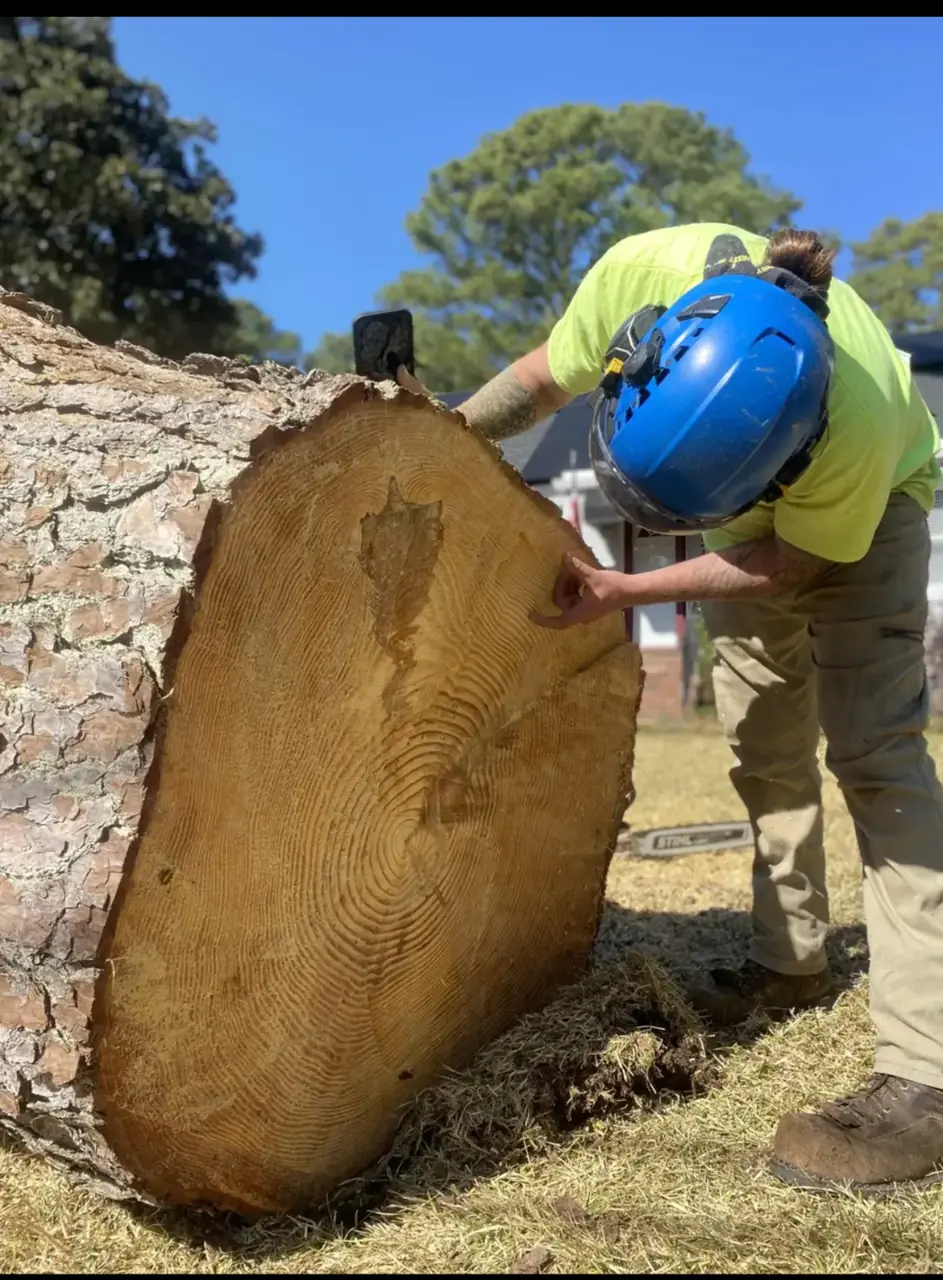
Affordable Isn’t Cheap
By Mike Campbell, Owner & Lead Climber, Art-is-Tree LLCPublished
- The promise
- Affordable tree work — not cheap tree work. There’s a difference.
- Biggest levers
- Phasing the job, keeping material on site, cut-and-leave options
- The catch
- Having us come back later to process wood costs more than doing it day-of
- Discounts
- 5% off for military, first responders, and seniors; 5% off when you request your free estimate through our website
- The long game
- Pruning every 3–5 years — the cheapest tree care there is
- The warning
- The cheapest guy isn’t always the cheapest price

Let’s talk about money
Tree work isn’t cheap, and I’m not going to open this guide by pretending it is. A big removal is skilled, dangerous work done with expensive equipment by people whose lives depend on doing it right. But here’s what most homeowners in Virginia Beach don’t know: there are real, honest ways to bring the price of a job down — sometimes by a lot — without cutting a single corner on safety. Nobody in this industry likes talking about them, because every one of them means a smaller invoice. I’d rather do the work at a price that fits your budget than have you hire the cheapest guy with a chainsaw and a dream. So let’s talk about it.
One thing before we start: this is a guide to affordable tree work, not cheap tree work. Affordable means a properly insured, experienced crew doing the job safely, with the scope trimmed to fit your budget. Cheap means somebody skipping the insurance, the training, or the cleanup — and handing you the risk. Keep that difference in your head the whole way through, because I’m going to come back to it.
The short version
- Much of a tree removal bill is cleanup, processing, and hauling — not the felling. Everything you keep on site comes off the invoice.
- Keep wood in unprocessed log lengths: cutting it to firewood size adds hours of paid saw labor.
- Decide on day one. A return trip to process material you kept costs more than including it in the original job.
- Stump grinding is a separate service — skipping it is an instant saving if the stump can stay.
- Phase big projects across seasons: urgent hazards now, the rest as the budget allows.
- Art-is-Tree offers 5% off for military, first responders, and seniors — just mention it — and 5% off when you request your free estimate through our website.
- Pruning every 3–5 years is the cheapest tree care there is — it prevents the removals that cost real money.
- Affordable ≠ cheap. A quote at half everyone else’s price is usually missing the insurance that protects you.
What you’re actually paying for in a tree work bid
When I price a job, I’m not throwing a dart. Every bid has to cover fuel to get the trucks and chipper to your street, dump fees for every load we haul off, labor for every man on the crew, payroll taxes on that labor, the insurance and workers’ comp that keep an accident from becoming your problem, and the slow bleed of equipment — saw chains, ropes, rigging gear, tires, hydraulics — that wears out a little on every single job.1 Then there’s the part that doesn’t show up on any receipt: you’re paying for the years it took to learn how to put a 60-foot pine on the ground without touching your fence. The saw cut takes seconds. Knowing exactly where to make it took me seventeen years.
Anatomy of a professional bid
Approximate share of a typical job — the shape matters more than the exact numbers.
Trained climbers and ground crew — the years of experience you’re actually hiring
Some of the most expensive coverage in any trade — and the part that protects YOU
Trucks, chipper, saws, rigging, crane time — and the diesel to run it all
Hauling and tipping fees for every load that leaves your property
Everything from saw chains to the licenses that make the work legal
Notice what’s not on this chart: padding. When a legitimate tree removal in Virginia Beach costs what it costs, this is why. And when a bid comes in at half everyone else’s price, one of these bars is missing — usually the insurance.
Keep more on site, keep more in your pocket
Here’s the biggest secret in tree work pricing: a huge slice of your bill isn’t the tree coming down — it’s everything that happens after it’s down. Chipping, cutting, loading, hauling, dump fees, and the hours of labor all of that takes. Every piece of that you’re willing to keep on your property is money straight off the invoice.
Full service
We remove the tree, grind the stump, haul every branch and log away
The turn-key price
Keep the chips
We chip the brush into your mulch pile instead of hauling it
Cuts disposal + trucking
Keep the wood, unprocessed
Logs stay in big sections — no cutting down to firewood size
Cuts hours of saw labor
Cut & leave in place
Tree comes down safely; everything stays where it lands
You’re paying for the skill, not the cleanup
Keep the chips. Our chipper turns the brush into wood chips, and those chips make genuinely good mulch — a lot of Virginia Beach gardeners pay money for what we haul away. If you want them, we blow them into a pile on your property and the disposal cost for the brush disappears from your bill — hauling debris off runs real money per truckload once dump fees and trucking are counted.4
Keep the wood — but keep it unprocessed. This is the one people get wrong. Folks say “just leave me the firewood,” thinking it saves money, then ask us to cut the trunk into neat 16-inch rounds. Cutting a trunk into firewood-size pieces is hours of additional saw labor, and labor is the most expensive line on the bid. The savings come from leaving the wood in big sections where the disposal cost and the processing labor both go away. You can work it up yourself over the winter or give it away on the neighborhood page — around here, log-length firewood disappears fast.
Cut and leave in place. On bigger properties, or for a back-corner tree nobody sees, the cheapest safe option is for us to put the tree on the ground in a controlled way and leave everything where it lands. You’re paying purely for the dangerous part — the felling, the rigging, the skill — and none of the cleanup.
Skip the stump — if it can stay. Stump grinding is a separate service with its own machine and its own price.2 If the stump is somewhere you can live with it — or you’d rather let it weather a few years first — leaving it is an instant saving. I’ll always tell you straight whether a stump is fine to leave or whether it’s going to be a problem where it sits.
Phase the project. Nobody says the whole property has to happen in one day. We do this all the time in Virginia Beach and across Hampton Roads: the hazardous tree over the house this year, the two leaners in the fall, the pruning next spring. The urgent work gets done now, the rest gets scheduled when the budget allows, and you’re never writing one giant check.
One warning before you keep anything
Decide on day one. If you keep the wood and change your mind in March, having us come back to process and haul material is almost always more expensive than if it had been part of the original job — it’s a second mobilization: the trucks, the fuel, the crew, and the setup time all over again, for a job with none of the efficiency of equipment that’s already on site. Keeping material saves real money. Keeping it and then calling us back doesn’t. Make the call once, at the estimate.
Military, first responder, and senior discounts
This region is full of people who’ve served — Oceana, Little Creek, Dam Neck, the shipyards, the fire and police houses in every city in Hampton Roads. We offer 5% off for active and retired military, first responders, and senior citizens, and all you have to do is mention it when you call. I’m not going to pretend 5% makes a big removal free, but on real tree work it’s real money, and it’s our way of saying thanks to the folks who’ve carried more than their share.
Military — 5% off
Active and retired military — just mention it with your estimate.
First responders — 5% off
Police, fire, EMS — same deal, just ask.
Seniors — 5% off
A straight 5% for senior citizens on any job.
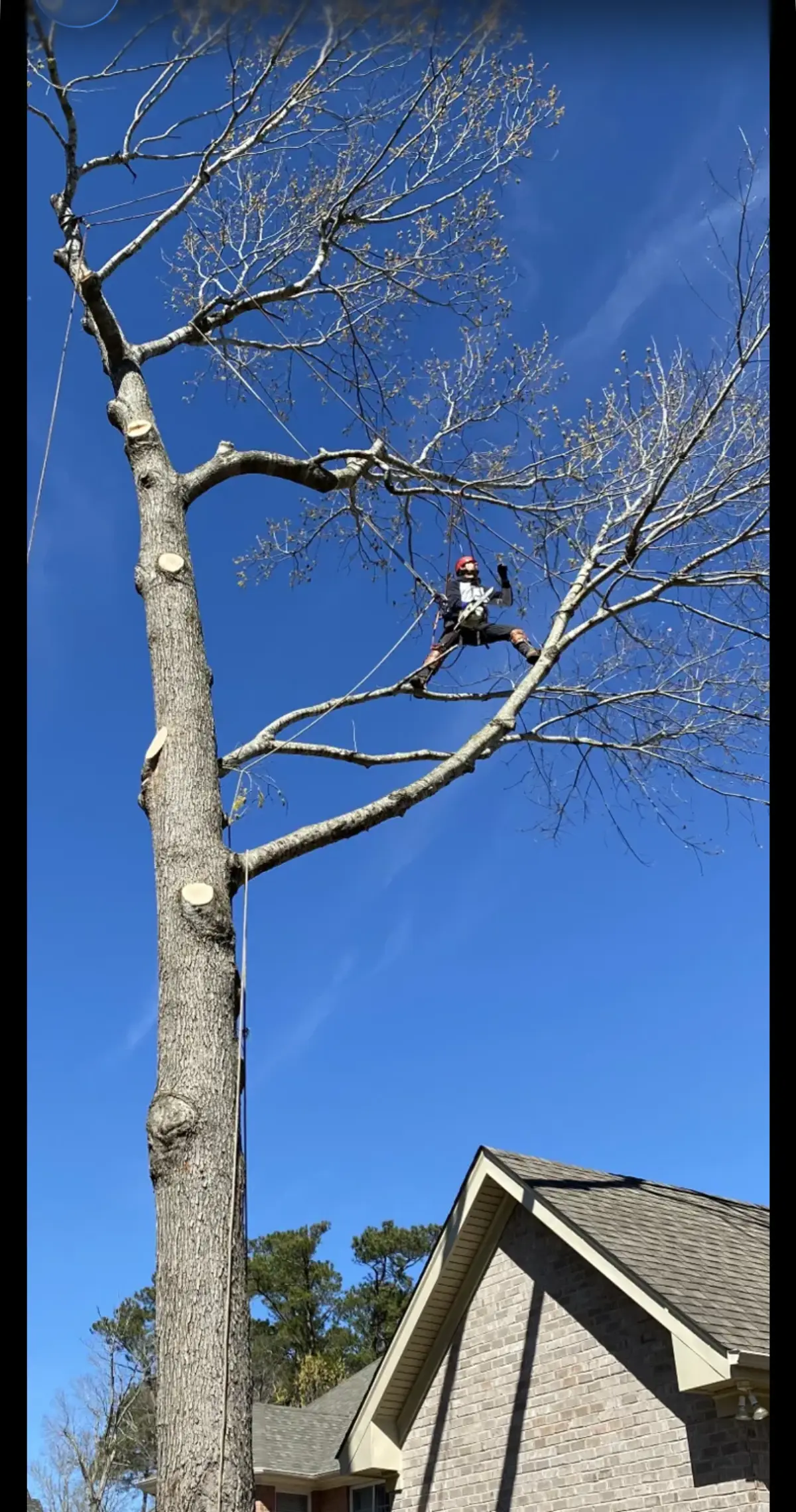
The cheapest tree work is the removal that never happens
Everything above is about lowering the cost of a job you already need. This part is about not needing the job at all. A pruning visit every 3 to 5 years — the schedule the arborist industry recommends for mature trees3 — keeps deadwood out of the canopy, catches problems while they’re still small and cheap, and builds the strong structure that shrugs off the storms we get here every year.5
Compare the math over ten years. A maintenance visit costs a fraction of a removal. An emergency removal after a nor’easter — crane on site, tree on the roof, insurance adjusters involved — costs multiples of a planned one, and that’s before the roof repair. I’ve written about what storms do to neglected trees in our storm damage case study, and about what healthy trees add to your home’s worth in the property value case study. The pattern in both is the same: the homeowners who spend a little on their trees regularly are the ones who never have to spend a lot.
If you want, we’ll put you on a simple cycle — we come, we prune to the ANSI A300 standard, spikeless, we tell you honestly what’s changed since last time, and you don’t think about your trees again for three years. That’s the most affordable tree care there is.
The cheapest guy isn’t always the cheapest price
Every spring, somebody in a Virginia Beach neighborhood group posts an estimate from us or one of the other established companies next to a number from a guy working out of a pickup, and the pickup guy is half the price. I understand the temptation completely. But that gap isn’t magic — it’s the bars missing from the chart at the top of this page. No liability insurance. No workers’ comp. No dump fees because the brush gets left in a pile. And if that crew drops a limb through your roof, or a man gets hurt in your yard, the bill lands on you — I walked through exactly how that works in our safety case study and the Virginia tree law one.
So here’s my honest pitch. Don’t hire cheap. Hire affordable: an insured, experienced local crew, and then use every lever in this guide — phase the work, keep the chips, keep the wood in log lengths, skip the stump, get on a pruning cycle, mention your discount. That’s how you get professional tree work at the best price it can honestly be done for. That number I can stand behind. The other one, somebody always ends up paying — and it’s usually the homeowner.
Tell us your budget. We’ll tell you what’s possible.
Estimates are free everywhere in Virginia Beach and Hampton Roads, and every one comes with the affordable options laid out — what to phase, what to keep, what can wait. Military, first responder, and senior discounts (5% off): just ask.
Sources
1. Jobber Academy, How to Price Tree Removal Jobs — labor, equipment, insurance, travel, and disposal as the components of a professional bid.
2. Forbes Home, Average Cost of Stump Grinding and Removal — stump work priced as a separate service from tree removal.
3. University of Minnesota Extension, Pruning Trees and Shrubs — routine structural pruning on a multi-year cycle for mature tree health and safety.
4. HomeGuide, Tree Debris Removal Cost — per-truckload hauling and landfill/tipping fees for tree waste.
5. International Society of Arboriculture, TreesAreGood, Pruning Your Trees — deadwood removal, structural pruning, and storm-damage risk reduction.
Affordable Tree Work in Virginia Beach: FAQ
Straight answers on what moves the price of tree work, and what doesn’t.
More questions? See our full tree service FAQ.