The Listing That Sold in a Week
By Mike Campbell, Owner & Lead Climber, Art-is-Tree LLCPublished
- The property
- A dated-looking home about to hit the market
- The problem
- Overgrown, gloomy front yard killing curb appeal
- The work
- Crown lifting, crown thinning, deadwooding, two removals
- The goal
- Sell the trees as an asset, not a buyer’s future expense
- The research
- Mature trees can add roughly 10% to a home’s value
- The result
- Multiple offers in the first week, over asking
Trees can sell a house — or scare buyers off
Most of the calls we get are about a problem — a dead tree, a storm-cracked limb, something leaning on a house. But every so often we get a different kind of call: a homeowner or their realtor getting a property ready to list, who has figured out that the trees out front are either going to help sell the place or quietly cost them money. This is a story about one of those, and about what I’ve learned in the years since about how much trees actually move the needle on what a home is worth.
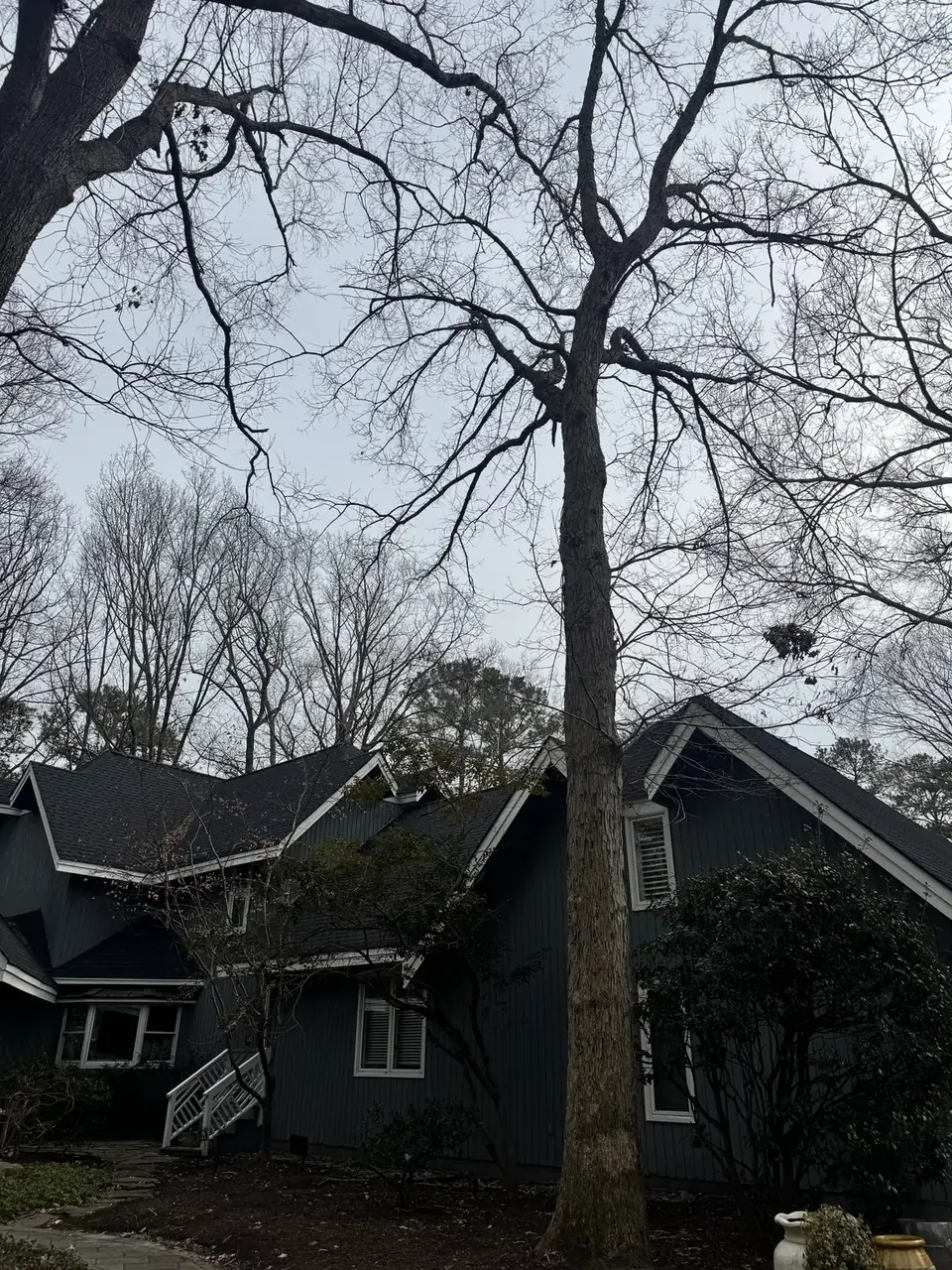
The house was in a nice older Virginia Beach neighborhood — good bones, good street, the kind of place that should show well. The trouble was the front yard. Nobody had touched the trees in probably fifteen years, and instead of framing the house they were swallowing it.
Overgrown, dark, and reading as ‘expensive’
You couldn’t really see the front of the house from the street. Low limbs hung down over the walkway and across the face of the home, so the architecture — nice brickwork, a good roofline — was hidden behind a wall of leaves. The canopy was so dense that almost no light reached the lawn underneath, and the grass had given up: bare, patchy dirt where there should have been a green front yard.
There was dead wood hanging in the crowns, too — the kind of stark gray deadwood a buyer notices from the driveway. And that’s the real problem. When a buyer pulls up to a house like that, they don’t think “beautiful mature trees.” They think “that’s going to be a huge bill the day I move in.” The realtor told me flat out that the trees were dragging down every showing. An overgrown, gloomy exterior reads as deferred maintenance, and deferred maintenance comes straight off the offer.
So the job wasn’t removal. Almost none of it was. The job was to take a set of good trees that had gone feral and turn them back into what they were supposed to be — the thing that makes the house look cared-for and inviting.
Refining trees, not removing them
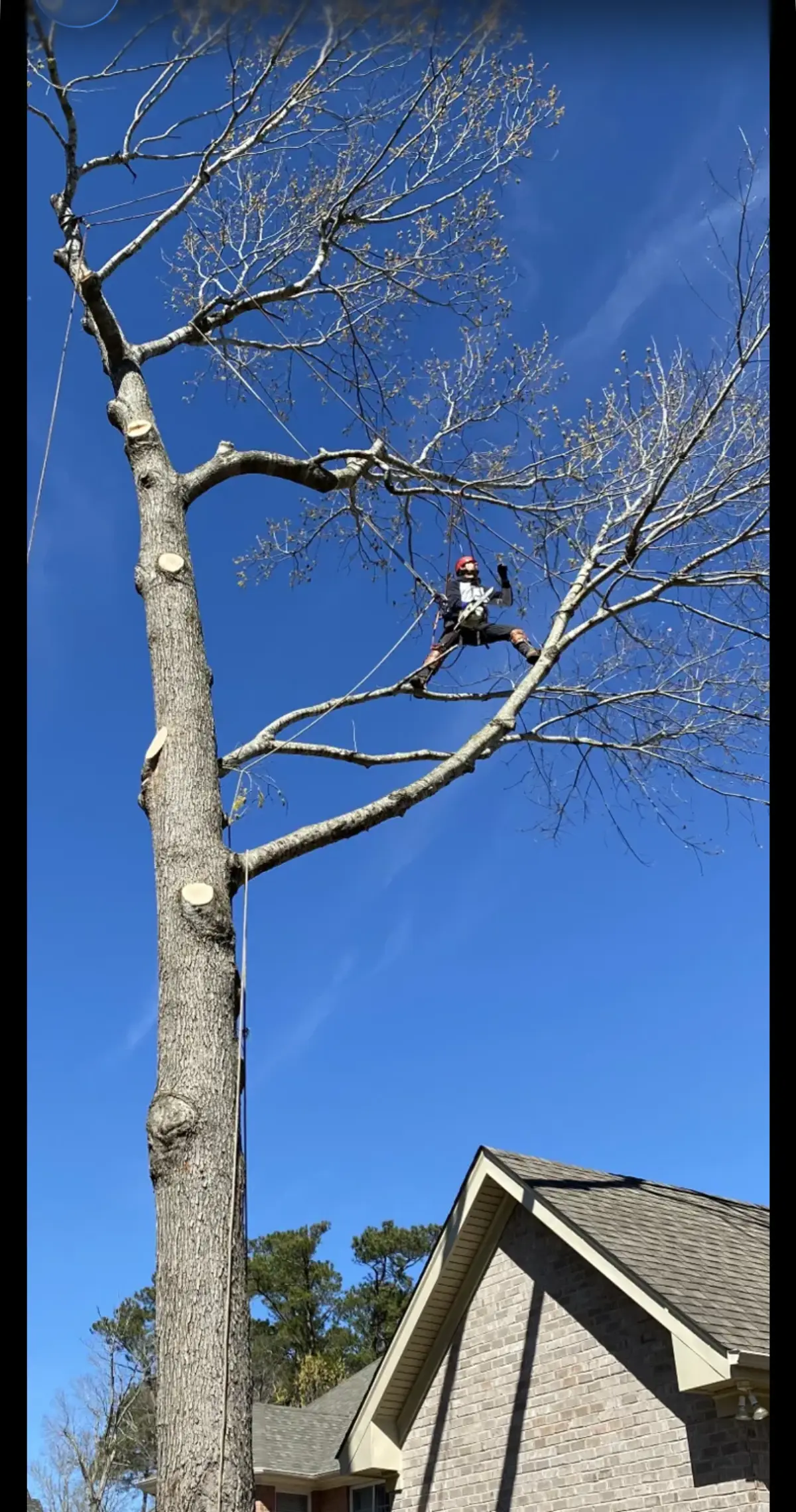
We treated the trees as architectural elements to be refined, not debris to be hauled off. There were four moves, and they’re the same four I’d recommend on most curb-appeal jobs:
Crown lifting
We took the lowest limbs off to open up the sightline from the street to the front of the house. That one change instantly made the property look bigger, brighter, and more welcoming.
Crown thinning
By selectively removing crossing and interior branches, we let real light down to the lawn again — so the grass could start recovering before the open house.
Deadwooding
Clearing the dead gray limbs out of the canopy erased the number-one visual cue that tells a buyer “this place has been neglected.”
Two selective removals
Two structurally compromised trees crowding the driveway came out — cleaning up the approach and removing a genuine liability at the same time.
Every cut on the trees we kept followed proper pruning standards — clean cuts at the branch collar, no topping, no more than about a quarter of the live crown removed at once, and no spikes on a tree we’re keeping. That matters here for a reason people don’t expect: sloppy pruning creates its own problems down the road, and topping a tree actually lowers value because it permanently disfigures it and invites decay. You can’t restore curb appeal by butchering the trees. You do it by pruning them correctly and letting them look like healthy, well-kept trees.
What the research actually says about trees and value
This isn’t just my opinion as a guy who loves trees. The research is pretty consistent: healthy, mature, well-placed trees add real, measurable value to a home. The U.S. Forest Service and arboriculture groups have long put the figure at roughly ten percent of a property’s value for good tree cover — and studies of mature trees and thoughtful landscaping have found premiums that can run higher than that on the right property.1
Individual trees carry appraised value, too. The Council of Tree and Landscape Appraisers publishes the industry’s standard method for putting a dollar figure on a tree, and a single large, healthy, well-located tree can be appraised in the thousands of dollars.2 That’s the flip side of a removal: a mature tree is an asset with a number attached, which is exactly why we don’t take one down unless it needs to come down.
There’s a Hampton Roads wrinkle worth adding, too. Buyers here are storm-aware — they know what a nor’easter or a hurricane can do to a big tree over a roof. So a tree that reads as neglected doesn’t just look bad; it reads as a risk, and risk gets priced in. A tree that’s been properly deadwooded and thinned reads as the opposite: safe, maintained, one less thing to worry about after closing. In a coastal market, healthy structure isn’t only prettier, it’s reassuring, and reassurance is worth money on offer day.
The point for a seller is simple. Spending a few thousand dollars to make your trees an asset instead of a liability is one of the highest-return moves you can make before a listing — right up there with paint and landscaping, and often cheaper than either. And when the landscaping side needs attention too — reseeding the lawn that finally gets light again, fresh beds, and full cleanup — we hand it to the crew we do the tree work for, Virginia Lawns, so the whole yard shows as one finished picture.
Multiple offers in the first week
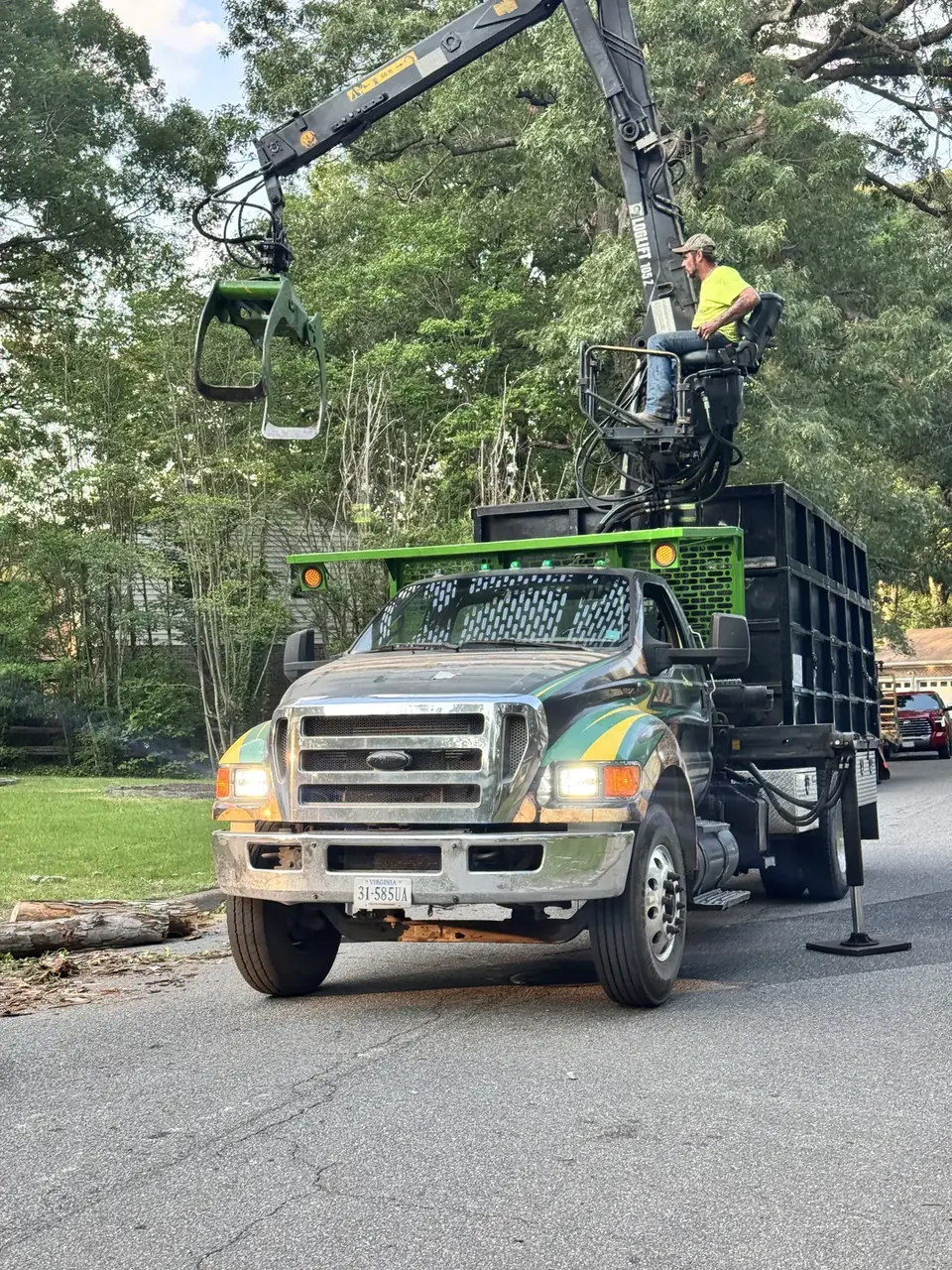
The difference was night and day. With the canopy lifted and the deadwood gone, the whole front of the house was suddenly bathed in light. You could finally see the brickwork and the lawn, and the trees framed the home instead of hiding it. We cleaned up completely and hauled everything off, so the yard was show-ready the same day we finished.
When it listed, the trees were working for the seller instead of against them. The home drew multiple offers in the first week and sold above the initial asking price. I can’t take credit for the whole sale — a lot goes into a good listing — but the realtor was clear that fixing the trees changed how the property showed from the very first photo.
That’s the whole lesson: professional tree care isn’t a maintenance cost you grudgingly pay. On a home you’re about to sell, it’s a direct investment in your equity — and unlike a lot of pre-listing spending, it’s one buyers can literally see from the curb before they ever walk in the door.
Tree care investment
~$3,200
Value / curb-appeal lift
up to ~10%
Representative figures for a single property; actual results vary by home, market, and tree condition.
What this means for Virginia Beach homeowners
If you’re getting a home ready to list anywhere in Virginia Beach or Hampton Roads, look at your trees the way a buyer will. Are they framing the house or hiding it? Is there dead wood in the crowns? Is the front yard dark and patchy because nothing gets light? Those are all fixable, usually with pruning rather than removal, and usually for a fraction of what buyers would knock off the price to deal with it themselves.
One caution: timing and technique matter. The move that raises value is skilled, standards-based pruning — not hacking the trees back or, worse, topping them, which permanently disfigures a tree and actually lowers what it’s worth. Done right, a curb-appeal prune is usually a single visit a few weeks before photos and showings, with a full cleanup so the yard is camera-ready. Done wrong, it can set you back further than doing nothing. That’s the difference between hiring an arborist and hiring whoever has a chainsaw in the truck.
And even if you’re not selling — well-maintained trees are quietly adding to your home’s value every year you own it. Keeping them healthy with routine pruning protects an asset that’s genuinely worth thousands of dollars. We’ll walk your property, tell you honestly what would move the needle before a sale and what to leave alone, and the estimate is always free.
Sources
1. International Society of Arboriculture, “Benefits of Trees” (citing U.S. Forest Service research that healthy, mature trees add roughly 10% to residential property value).
2. Council of Tree and Landscape Appraisers, Guide for Plant Appraisal — the standard method for appraising the monetary value of individual trees.
Turn your trees into an asset before you list.
Don’t let overgrown trees quietly cost you money at the closing table. We’ll refine your canopy, restore the curb appeal, and clean up completely — anywhere in Virginia Beach and Hampton Roads. Free estimate.
Maximize Your Property Value