Why Safety Isn’t Optional
By Mike Campbell, Owner & Lead Climber, Art-is-Tree LLCPublished
- The reality
- Tree work is among the most dangerous jobs in America
- The standard
- ANSI Z133 — the national safety standard for tree work
- The regulator
- OSHA, via the General Duty Clause (measured against ANSI Z133) and its general-industry electrical rules
- Biggest killers
- Falls, struck-by (falling limbs), and electrocution
- Our practice
- Fall protection, full PPE, minimum approach distances, rigged loads
- Your exposure
- An uninsured injury on your property can land on you
The stuff you don’t see is what keeps everyone alive
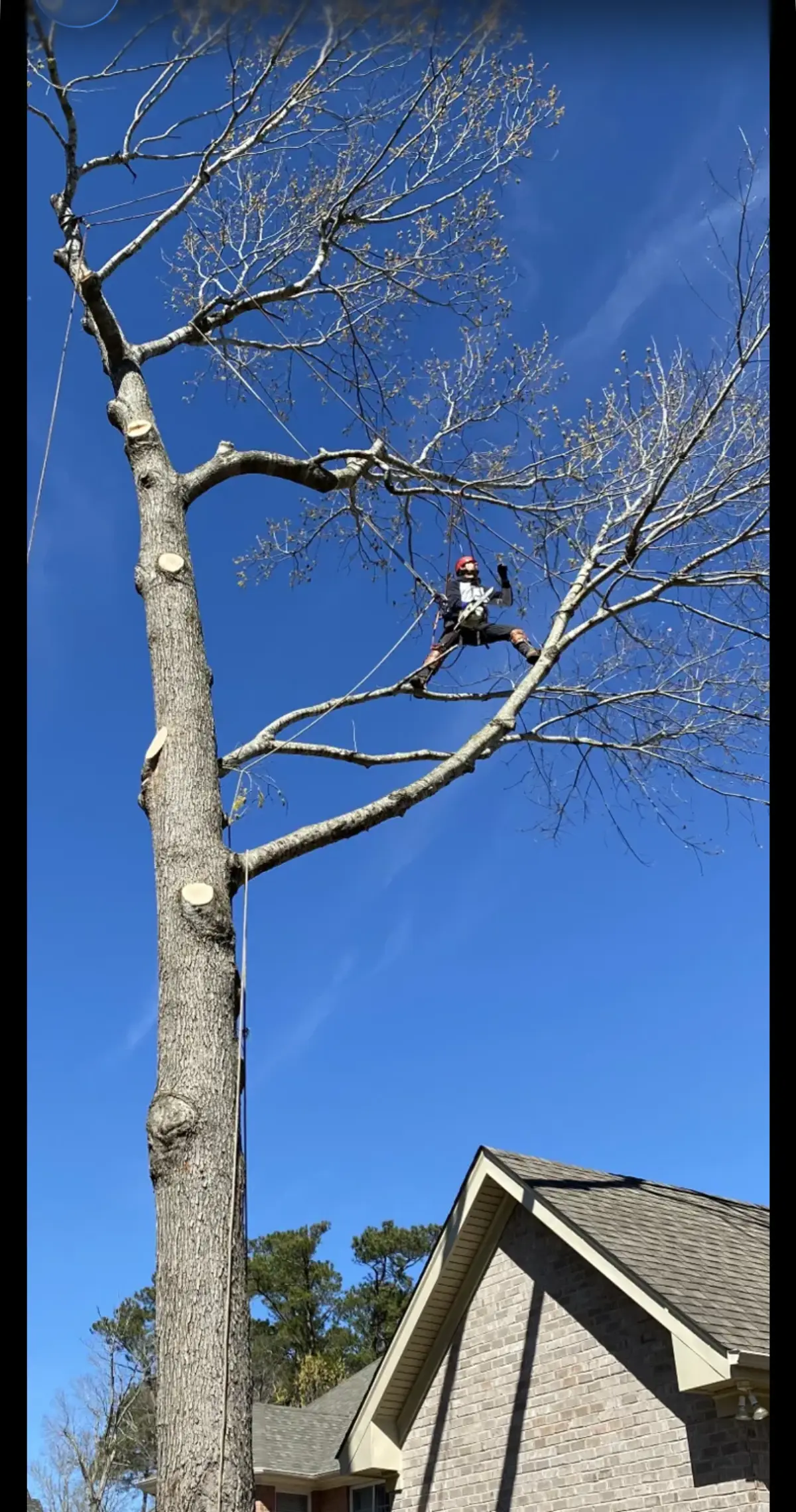
I’m Mike, and I own Art-is-Tree. When people watch us work, they see the exciting parts — a climber a hundred feet up, a crane picking a two-ton log clean over a roofline, big pieces of wood flying out to the chipper. What they don’t see is the two hours of planning, the gear checks, the ropes we retired last month, and the dozens of small decisions that happen before anybody ever pulls a saw. That invisible part is the whole job. It’s the difference between a tree service and a guy with a chainsaw and a ladder.
I don’t write about safety to brag about it. I write about it because tree work is genuinely dangerous, because most homeowners have no way to tell a professional crew from a reckless one until something goes wrong, and because who you hire can put your property and your liability on the line. So here’s an honest look at how we actually run a job, what the rules are, and why they exist.
One of the most dangerous jobs in the country
This isn’t me being dramatic. Tree care consistently ranks among the most dangerous occupations in the United States, with a fatality rate many times higher than the all-industry average. The three things that kill tree workers are almost always the same: falls from height, being struck by a falling limb or log, and electrocution from contact with power lines.1
Every one of those is preventable. A fall is preventable with a properly rigged climbing system and fall protection. A struck-by is preventable with a clear drop zone, controlled rigging, and a ground crew that knows where to stand. An electrocution is preventable by respecting minimum approach distances and never treating a power line as “probably dead.” None of that is luck. It’s training, gear, and discipline, applied the same way on every single job — the easy backyard trim and the storm-snapped pine leaning on a house both.
The crews that get people hurt aren’t unlucky. They’re the ones skipping the invisible part — no fall protection, worn-out ropes, no plan for where the wood lands, no idea how close is too close to a line. It costs money and time to do it right, and cutting those corners is exactly how the low bid gets low.
OSHA sets the floor. ANSI Z133 sets the standard.
Here’s something most people don’t realize: OSHA doesn’t have one single, all-in-one rulebook written just for tree care. What it has is the General Duty Clause — the legal requirement that an employer keep the workplace free of recognized hazards that can kill or seriously hurt someone — plus general-industry standards that apply to our work, like the rules for working near overhead power lines under 29 CFR 1910.333(c)(3).2 (The utility line-clearance rule, 1910.269, covers the crews the utility sends.) OSHA can and does cite tree companies under those rules when someone gets hurt.
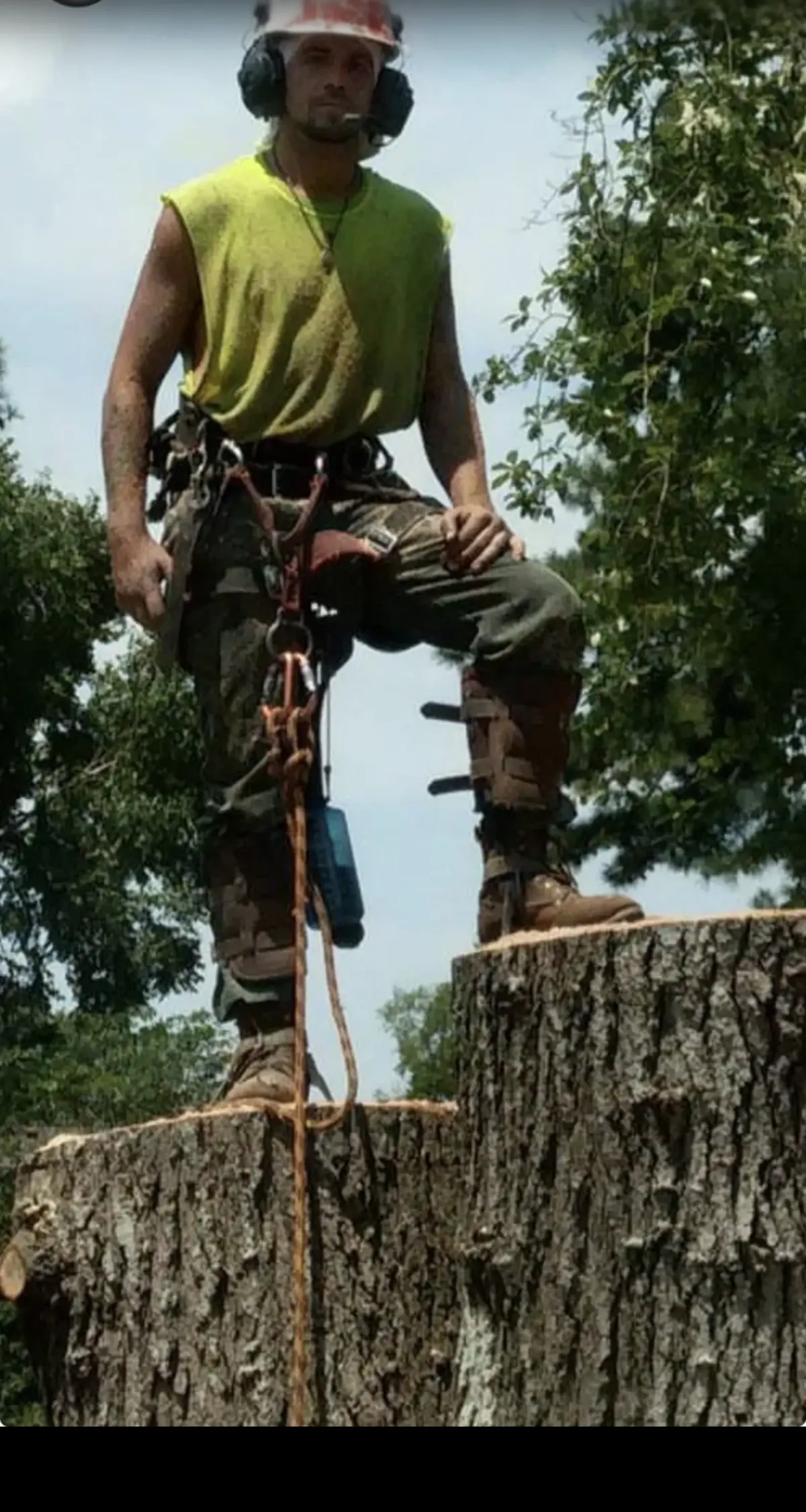
The detailed, tree-specific playbook is ANSI Z133 — the American National Standard for arboricultural operations. Z133 is the consensus safety standard our whole industry is measured against. It spells out the minimum approach distances to power lines, the personal protective equipment required, how climbing and rigging systems have to be set up and inspected, and how the work zone gets controlled.3 When I tell you we work to Z133, I’m telling you we hold ourselves to the same written standard a court or an insurer would use to judge whether a job was done responsibly.
Virginia has also adopted its own tree-work safety rule, 16VAC25-73, enforced by the Virginia Department of Labor and Industry and built on Z133; what it requires is laid out in our tree service insurance article.
We’re members of the International Society of Arboriculture, we work to that Z133 standard, we’re licensed, and we carry real liability and workers’ compensation insurance. That last part matters more than most homeowners think, and I’ll come back to why.
Power lines don’t give second chances
Of everything we do, electrical contact is the hazard I respect the most, because it’s the one that offers no warning and no do-over. A limb that looks like it’s clear of a line can conduct if it’s wet. A line that looks dead almost never is. This is why Z133 sets minimum approach distances — hard limits on how close an unqualified worker or a conductive tool can get to an energized conductor — and why OSHA’s electrical work-practice rules hold us to the same limits.2
On our jobs, if a tree is inside that danger zone, the answer isn’t “be careful.” The answer is a plan: we keep the required distance, we treat every line as live, and when the work genuinely belongs to the utility, we get the line cleared or de-energized before anyone goes near it. Hampton Roads has a lot of mature trees grown up right into overhead lines, and after every big storm we get calls about limbs down on wires. That’s exactly the situation where an untrained crew gets someone killed — and exactly where the boring discipline of a minimum approach distance saves a life.
There is no tree worth a life, and no deadline worth cutting that corner. If a job needs the power company involved, it waits for the power company.
Plan the work, then work the plan
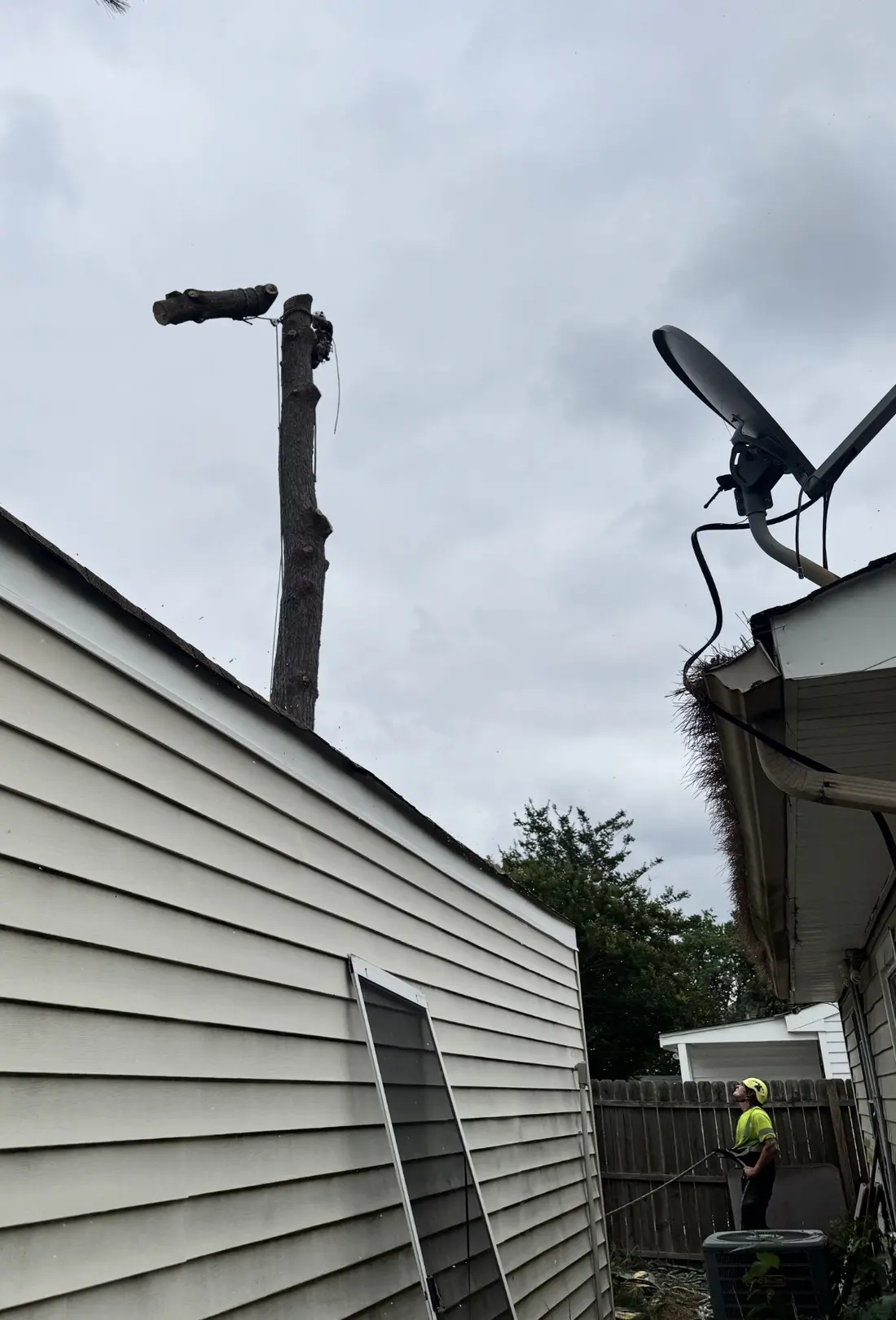
Before we cut anything, we walk the property and hold what amounts to a tailgate briefing. Where’s the tree going to be taken apart? Where’s the drop zone? Where are the lines, the house, the fence, the neighbor’s shed, the septic field? Who’s climbing, who’s running the ground, who’s watching the road? Everybody knows the plan before a saw starts, and if the plan needs to change mid-job, we stop and re-set it.
Then the gear. Helmets, eye and hearing protection, and saw-rated leg protection are not optional on my crew. Climbing lines, lanyards, and rigging get inspected, and anything that’s worn or questionable gets retired — rope is cheap, and a person is not. When a piece is too big or too close to something to just cut and drop, we rig it: the climber ties it off, the ground crew controls the line, and the wood comes down under control instead of falling where gravity feels like taking it. When the tree is over a house or a target we can’t risk at all, that’s when we bring in the crane and take the weight off before the cut — the same approach you can read about in our crane removal case study.
And we climb spikeless on anything we’re not removing, because spikes wound a living tree — that’s a health standard, but it comes from the same mindset: do the job the right way even when the shortcut is easier.
None of this is a one-time thing you learn and forget. The gear changes, the standards get updated, and every property throws something new at you — a rotten leader, a hidden line, saturated ground after a nor’easter. So we keep training, we talk through the near-misses, and we treat a routine Tuesday removal in Kempsville with the same seriousness as a crane pick over a rooftop in Great Neck. A safety culture isn’t a poster in the truck. It’s the habit of never assuming, on any job, that the boring precaution is the one you can skip today.
Hiring the wrong crew moves the risk onto you
Here’s the part that catches homeowners off guard. When an uninsured worker gets hurt on your property, the injury doesn’t just stay with him. Without workers’ compensation coverage behind that crew, an injured worker may try to recover medical bills and lost wages from the property owner — you. And if a poorly judged cut sends a tree through your roof, an uninsured company may have nothing to make you whole with. The “great price” from the truck with no logo and no certificate of insurance can turn into the most expensive tree work of your life.
This is the same thread that runs through our Virginia tree law case study: cheap and unaccountable are usually the same company. Asking for proof of liability insurance and workers’ comp isn’t rude — it’s the single best question a homeowner can ask, and any legitimate company will hand you the certificate without blinking.
So when you get an estimate from us, part of what you’re paying for is the invisible half of the job — the training, the inspected gear, the insurance, and the discipline to do it to standard every time. That’s not overhead. That’s the reason everyone goes home at the end of the day and your property is the same or better than we found it.
Real coverage
Licensed, insured, and carrying workers’ comp — so a jobsite injury never becomes your bill.
Line-aware
Minimum approach distances respected on every job; live lines are left to the utility.
Done to standard
ANSI Z133 practices and full PPE on the easy jobs and the hard ones alike.
Sources
1. U.S. Centers for Disease Control and Prevention / NIOSH, preventing falls and electrocutions during tree work — falls and electrocutions as leading causes of death in tree work (1980–1988).
2. U.S. Occupational Safety and Health Administration (OSHA), “Tree Care” — General Duty Clause, 29 CFR 1910.333 (electrical work practices) and 1910.269 (utility line-clearance work).
3. ANSI Z133, Safety Requirements for Arboricultural Operations — American National Standards Institute.
Licensed, insured, and done to standard.
If you’ve got a tricky tree — near a line, over the house, or storm-damaged — in Virginia Beach or anywhere in Hampton Roads, we’ll come assess it and give you a straight, safe plan. The estimate is free.
Get a Free Estimate